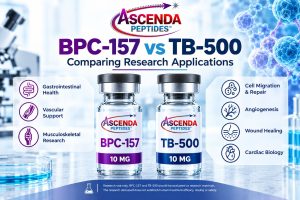
BPC-157 vs TB-500
BPC-157 and TB-500 are frequently discussed together because both appear in research
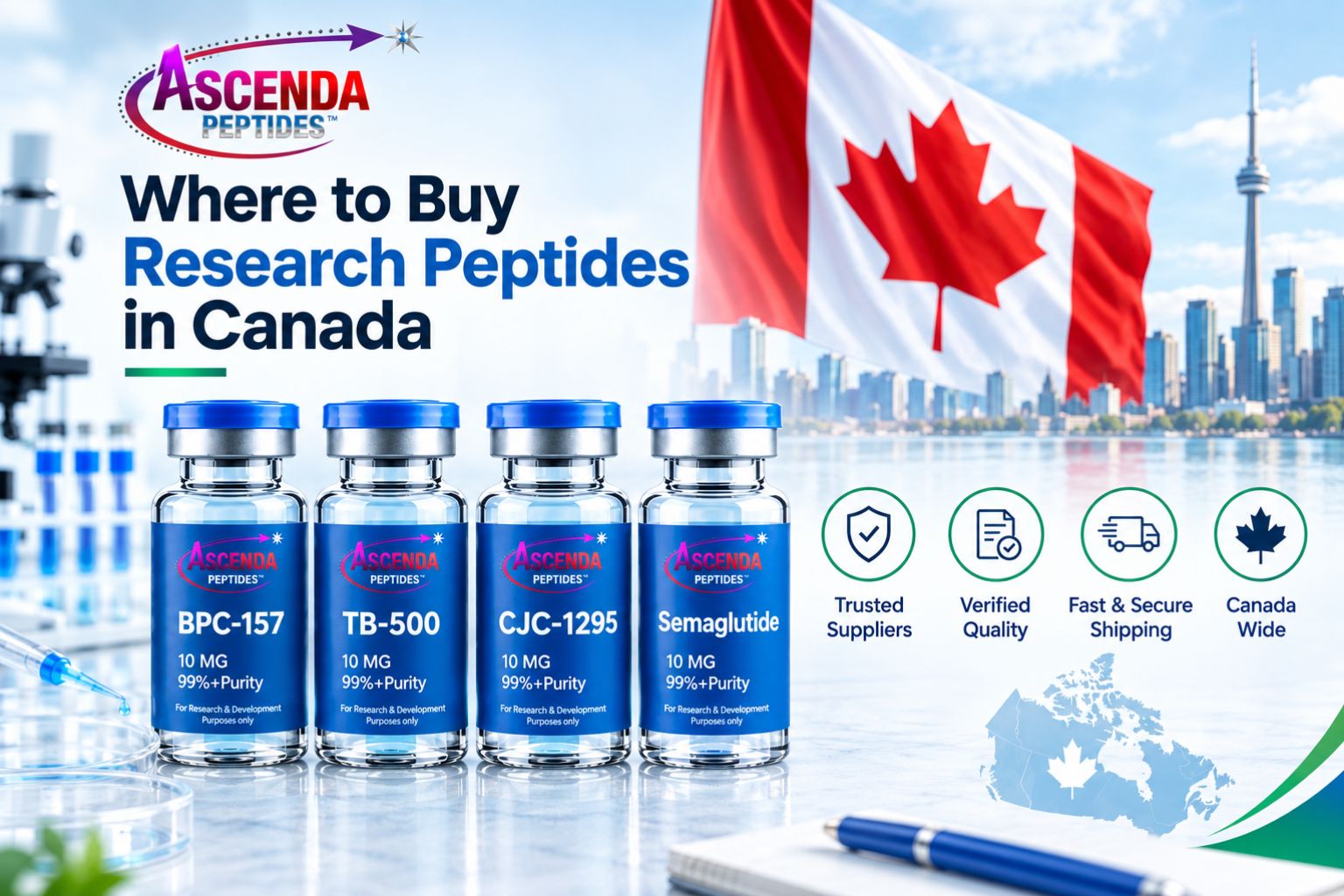
Finding where to buy research peptides in Canada is only the first step. Researchers should also evaluate product identity, purity documentation, independent testing, batch traceability, research-use restrictions, product specifications, supplier transparency and Canadian fulfilment before placing an order.
If you are comparing research peptide suppliers in Canada, look beyond a purity percentage or price. A stronger evaluation starts with batch-specific documentation, clearly identified analytical methods, third-party testing where available, traceable product information and explicit research-use-only positioning.
A useful supplier evaluation can be reduced to 10 checks:
The purpose is not to find the supplier making the biggest quality claim. It is to find enough verifiable information to understand what research material you are purchasing.
Research peptides should be presented according to their intended research context.
A responsible supplier should clearly distinguish laboratory research materials from approved medicines or products intended for human use. Product pages should not blur scientific research with therapeutic promises, treatment claims or human-use instructions.
This distinction is particularly important in Canada. Health Canada currently warns that research-use-only labelling does not by itself make an unauthorized peptide product legal or exempt from regulatory requirements. The agency also states that many injectable peptide drugs are regulated as prescription drugs in Canada.
For research procurement, therefore, check the product’s stated intended use and make sure it aligns with your laboratory, institutional and applicable regulatory requirements.
Before considering purity, make sure the supplier clearly identifies the material.
Useful product information can include:
This information gives researchers a basic reference point for comparing the material against its documentation.
A product page that simply says “high-quality peptide” provides much less information than one that identifies the material and explains the analytical documentation associated with it.
A Certificate of Analysis, or COA, is one of the most useful documents to review when evaluating a research material.
A COA should describe the material that was actually tested. Ideally, it should identify the:
The important distinction is batch-specific versus generic documentation.
A generic certificate showing that a supplier once tested a compound does not necessarily tell you whether the material currently being supplied belongs to that same tested batch.
For procurement, ask:
Can I match the COA to the batch or lot of the material being supplied?
If the answer is unclear, the documentation provides less traceability.
High-Performance Liquid Chromatography, commonly called HPLC, is frequently used to assess peptide purity.
At a high level, HPLC separates components in a sample so that the analytical result can be used to estimate the proportion represented by the target compound under the specified method.
That means a statement such as “99% HPLC purity” should be interpreted as an analytical result produced by a particular method, not as a universal statement about every aspect of the material.
When reviewing HPLC documentation, look for:
A purity percentage is useful, but the surrounding documentation gives it context.
Purity and identity are related but different questions.
HPLC primarily helps assess purity under the analytical method used. Mass Spectrometry can provide molecular-weight information that supports identity confirmation.
A simplified way to think about the difference is:
| Method | Main Question |
| HPLC | How pure is the material under the stated analytical method? |
| Mass Spectrometry | Does the measured molecular mass correspond with the expected compound? |
| COA | What were the documented test results for the tested batch? |
| Batch number | Which production lot does the documentation describe? |
Using both purity and identity information gives a researcher a more complete analytical picture than relying on a single percentage.
When comparing suppliers, therefore, do not simply ask, “Is it 99%?”
Ask:
“How was that result measured, and how was the identity of the material confirmed?”
A supplier can state that a product was tested. Independent testing provides an additional layer of verification when the testing laboratory is separate from the supplier.
Look for documentation that identifies:
The word “third-party” should also be supported by identifiable documentation. A vague statement such as “independently tested” is less useful when the laboratory and report cannot be identified.
Ascenda Labs states that its research peptides undergo independent analytical testing and highlights HPLC and Mass Spectrometry verification. Its published testing page also provides batch-related certificates and identifies HPLC-UV as a testing method.
Batch traceability connects the material you purchase with its analytical documentation.
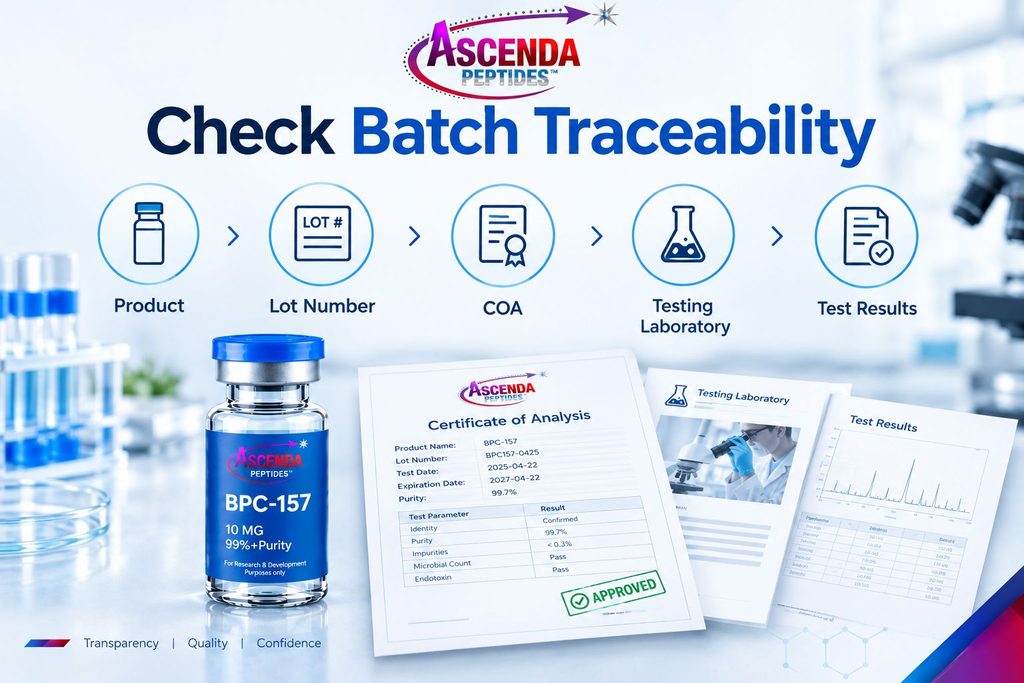
A simple procurement check is:
Product → Lot Number → COA → Testing Laboratory → Test Results
If one of those connections is missing, verification becomes more difficult.
For example, if a supplier publishes one certificate for a peptide but does not identify which production lot it represents, you cannot confidently assume that the certificate describes every subsequent batch.
Batch-level documentation is particularly useful for laboratories where reproducibility and material records matter.
Quality documentation is only one part of supplier evaluation.
Researchers should also review whether the supplier clearly communicates:
A transparent supplier does not need to make exaggerated claims to demonstrate credibility.
In fact, restrained language can be useful. A supplier that clearly separates documented product characteristics from broader scientific claims gives researchers a better basis for evaluation.
For Canadian researchers, the location and fulfilment route may also matter.
A Canadian supplier may offer domestic fulfilment, Canadian-dollar pricing and a simpler domestic purchasing process. Cross-border sourcing can introduce additional logistics and regulatory considerations.
However, Canadian fulfilment should not automatically be treated as proof of product quality.
Domestic shipping answers a logistics question. It does not independently establish purity, identity or analytical quality.
Evaluate these factors separately:
Product quality → Documentation → Testing → Traceability → Supplier transparency → Fulfilment
This prevents the common mistake of treating “ships from Canada” as a substitute for laboratory evidence.
One of the simplest improvements researchers can make is to review documentation before completing a purchase rather than after the material arrives.
Before ordering, check:
If several answers are “no,” you have less information available for your procurement decision.
The most useful starting point is a batch-specific analytical report from an identifiable laboratory. Review the reported HPLC purity, testing date, batch number and laboratory information, then check whether identity verification, such as Mass Spectrometry, is also documented.
Do not treat a “99% pure” statement by itself as complete evidence. The analytical method and batch documentation provide the context needed to interpret the claim.
A Certificate of Analysis is a laboratory document reporting analytical results for a specific material or production batch.
For research peptides, useful COA information may include:
The exact contents can vary by laboratory and material.
The key principle is simple:
A COA describes tested material. A product page describes what the supplier says it is selling. Ideally, the two should connect through the batch or lot number.
Researchers should avoid treating HPLC and Mass Spectrometry as interchangeable tests.
HPLC can help quantify purity under a specified analytical method. Mass Spectrometry provides molecular-weight information that can support identification of the target compound.
This is why a research supplier that provides both types of analytical information can give researchers more useful evidence than a supplier that provides only a headline purity percentage.
Independent educational resources on peptide COAs similarly distinguish HPLC purity assessment from mass-spectrometric identity confirmation.
Research-use-only positioning should be treated as an intended-use statement, not as a guarantee of regulatory approval.
Health Canada has recently taken enforcement action involving unauthorized injectable peptide products and has warned that products labelled “For Research Use Only” are not automatically exempt from Canadian regulatory requirements.
For researchers, the practical takeaway is to distinguish three separate questions:
Laboratories should also follow their institutional policies, applicable laws and research-safety requirements.
This article does not provide instructions for human administration, dosing, injection or self-treatment.
Ascenda Labs positions its catalogue around research-focused peptide materials and currently presents more than 23 peptides across 12 research categories. The site highlights 99%+ purity positioning, third-party testing, HPLC and Mass Spectrometry verification, lyophilized materials and Canadian delivery.
Its catalogue includes research categories covering areas such as:
For example, researchers investigating mitochondrial pathways can review Ascenda’s mitochondrial category, which currently includes MOTS-C and SS-31 alongside NanoMatrix.
Individual product pages also provide compound-specific information. For example, Ascenda’s SS-31 page identifies the compound, CAS number, molecular information, 10 mg format, HPLC-tested purity and Research Use Only designation.
Ascenda also publishes third-party testing documentation that connects specific reports with products, test dates and reported results. Researchers should still review the documentation applicable to the specific material and batch they are considering.
Once a supplier passes your documentation and transparency checks, the next step is to identify the appropriate research category. Different research categories and compounds are represented in Ascenda’s selection of 10 peptides.
For example:
These categories describe research areas rather than therapeutic recommendations.
If your project involves comparing specific compounds, a dedicated comparison resource can provide more scientific context. For example, Ascenda’s BPC-157 vs TB-500 research comparison provides a separate discussion of their research applications and evidence context.
NanoMatrix should not be treated as another peptide.
Ascenda describes NanoMatrix™ as a separate nano-metallic silver oxide research matrix and explicitly states that it is not a peptide. Its role and research considerations therefore need to be evaluated separately from the peptide compounds themselves.
Before buying research peptides in Canada, ask:
A supplier that makes these questions easy to answer gives researchers more information to work with than one that relies primarily on broad quality claims.
Researchers can source research peptides from Canadian suppliers that clearly provide product information, analytical documentation, batch identification and research-use-only positioning. Compare documentation and testing practices before selecting a supplier.
Evaluate the supplier’s product specifications, batch-specific COAs, testing methods, laboratory information, traceability, research-use policies, Canadian fulfilment and documentation accessibility before ordering.
Look for clearly identified research materials, batch-specific documentation, analytical testing, traceable lot numbers, transparent supplier information and explicit research-use-only positioning.
Review the applicable batch-specific COA and its HPLC results, testing laboratory, test date and lot number. Where available, review Mass Spectrometry information separately for identity confirmation.
A COA is a laboratory document reporting analytical results for a particular material or batch. It can include purity, identity, testing method, laboratory, date and batch information.
Batch-specific documentation is preferable because it allows the analytical report to be connected to a defined production lot rather than relying on a generic certificate.
HPLC separates components in a sample and can be used to assess purity under a specified analytical method. The reported percentage should be interpreted alongside the method and supporting documentation.
Mass Spectrometry measures molecular mass and can provide evidence supporting the identity of the compound. It answers a different analytical question from HPLC purity testing.
Research-use-only materials should not be treated as approved medicines or products for human use. Health Canada warns that RUO labelling does not itself make an unauthorized peptide product legal or exempt from regulatory requirements.
Canadian fulfilment can simplify domestic logistics, but location alone does not establish product quality. Evaluate Canadian sourcing separately from purity, identity, testing and documentation.
If you are evaluating research materials for a Canadian laboratory, start with the documentation rather than the marketing claim. Review the compound information, analytical testing, batch documentation and intended-use information before making a purchasing decision.
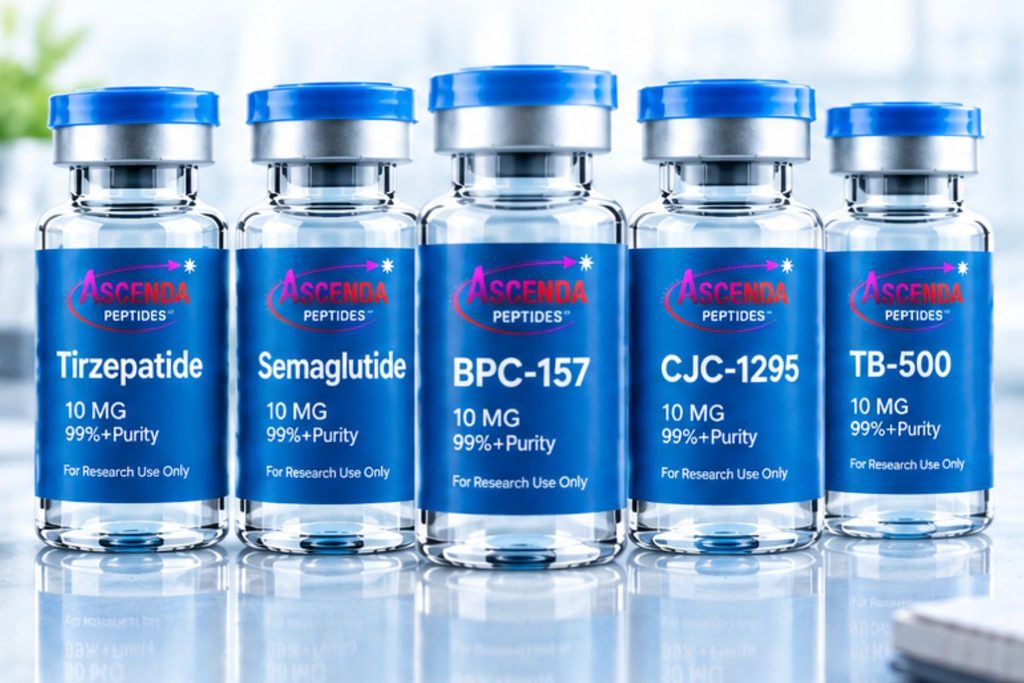
Explore Ascenda Labs Research Peptides
For qualified university and research-centre procurement, Ascenda also presents academic research and bulk purchasing options on its website.
Research Use Only: Ascenda’s research materials are presented for research purposes and are not presented as approved medicines or as products for human or veterinary use.
BPC-157 and TB-500 are frequently discussed together because both appear in research
By Dr. Andrew J.M. Willoughby & Truc Tran Co-Authors Interest in peptides
Research peptides are short chains of amino acids studied for their interactions
Peptide research involves more than selecting a high-purity peptide. Researchers also need